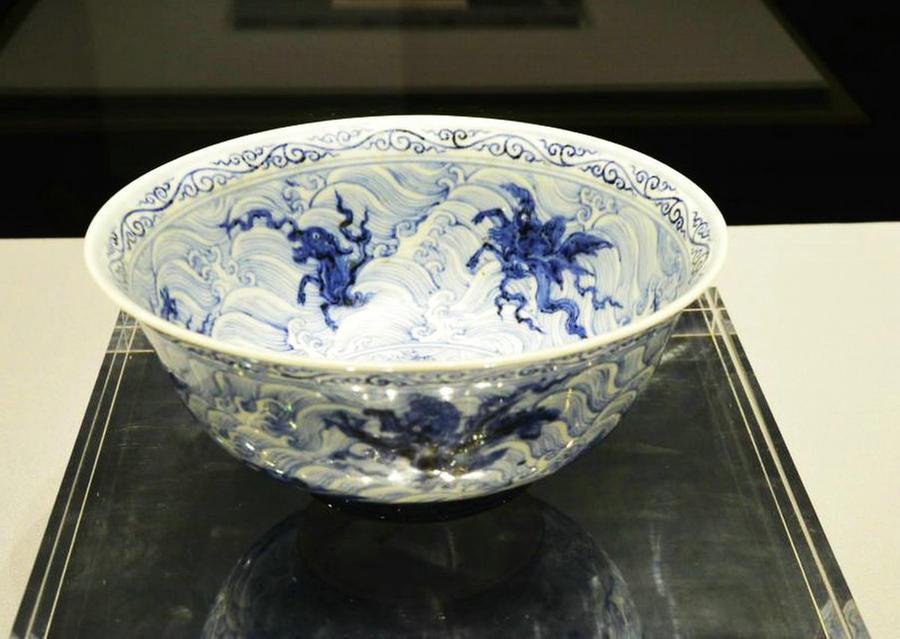
Blue-and-White Porcelain
Introduction
Chinese Blue-and-White Porcelain, also known as Qinghua porcelain, is a renowned form of ceramic art originating from China. Its distinctiveness lies in its unique combination of white clay and blue cobalt oxide, which is painted onto the surface before glazing and firing. The production of these porcelains dates back to the Tang Dynasty (618-907), achieving prominence during the Yuan (1271-1368) and Ming (1368-1644) dynasties. Known for its fine craftsmanship, intricate designs, and artistic beauty, Chinese blue-and-white porcelain not only serves as functional ware but also as a form of aesthetic art. It holds an esteemed position in Chinese culture and has become a symbol of Chinese artistry.
History
The history of Chinese blue-and-white porcelain is a journey that traces its roots back to the Tang Dynasty, evolving through various dynasties. The art form saw initial development during the Tang Dynasty with the use of cobalt blue imported from Persia, but it was not until the Yuan Dynasty that its production truly flourished. The period marked the establishment of a distinct style, characterized by cobalt blue decoration on a white body. This was partly due to the Mongol Empire's control over trade routes, which facilitated the import of cobalt blue.
During the Ming Dynasty, particularly under the reign of Emperor Yongle (1403-1424) and Xuande (1426-1435), the artistry and production of blue-and-white porcelain reached new heights. The kilns in Jingdezhen, Jiangxi province, became the center of porcelain production, renowned for their high-quality kaolin clay and skilled artisans. The Ming Dynasty saw the expansion of designs, incorporating floral, animal, and landscape motifs, reflecting the era's aesthetic preferences.
In the Qing Dynasty (1644-1911), the art form continued to evolve, with the Kangxi (1661-1722), Yongzheng (1723-1735), and Qianlong (1736-1796) periods being notable for their refinement and innovation in design and techniques. The Qing period also witnessed an increase in the complexity of decorative themes, including the integration of enamel colors with the traditional blue-and-white style.
Production Techniques
The production of Chinese blue-and-white porcelain involves a detailed and labor-intensive process that begins with the selection of high-quality raw materials. The primary material is kaolin clay, known for its purity and plasticity, which is mined primarily in Jingdezhen. The clay is meticulously cleaned, filtered, and mixed to achieve the desired consistency.
Once prepared, artisans shape the porcelain either by hand or using a potter's wheel, depending on the piece's complexity. After shaping, the item is left to dry to a leather-hard state before artisans apply the cobalt oxide decoration. The cobalt, which gives the porcelain its iconic blue hue, is mined and refined before being imported to China, historically sourced from Persia and, later, from domestic mines.
The cobalt oxide is mixed with water to create a paint-like consistency, which artisans apply using brushes to create intricate designs. After decoration, the porcelain is coated with a clear glaze that enhances the cobalt's vibrancy. The glazed pieces are then carefully placed in kilns and fired at high temperatures, typically around 1300°C. This firing process vitrifies the porcelain, creating a durable, glass-like surface and permanently setting the cobalt decoration.
Characteristics
Chinese bue-and-white porcelain is distinguished by several defining characteristics that contribute to its enduring appeal. The primary feature is the striking contrast between the deep blue designs and the pristine white background. The blue color, achieved through the use of cobalt oxide, offers a wide range of tonal variations, from light and delicate to dark and intense, depending on the application technique and firing conditions.
The designs on blue-and-white porcelain are typically intricate and detailed, showcasing a variety of traditional Chinese motifs. Common themes include floral patterns, such as peonies and chrysanthemums, mythical creatures like dragons and phoenixes, as well as landscapes and scenes from Chinese folklore. The artistry of these designs reflects the cultural and aesthetic values of the periods in which they were produced.
Another characteristic of Chinese blue-and-white Porcelain is its translucency, achieved through the high-quality kaolin clay and the precise firing process. This translucency, combined with the smooth, glass-like glaze, gives the porcelain an ethereal quality, enhancing its visual appeal.
Cultural Significance
Chinese blue-and-white porcelain holds immense cultural significance as a symbol of Chinese artistry and craftsmanship. It is not merely a functional item but a medium through which cultural stories and artistic expressions are conveyed. This porcelain reflects China's historical and aesthetic evolution, embodying the cultural exchanges that occurred along the Silk Road and beyond.
In Chinese culture, blue-and-white porcelain has been associated with wealth, status, and refined taste. Historically, it was highly prized by Chinese nobility and was often used in imperial courts. The porcelain's motifs, often drawn from traditional Chinese symbolism, carry meanings of prosperity, longevity, and good fortune.
Beyond China, blue-and-white porcelain became a significant cultural export, influencing artistic traditions across the world. Its popularity in Europe, the Middle East, and Asia led to cross-cultural exchanges that enriched artistic practices globally. The porcelain's aesthetic and cultural value continues to resonate today, making it an integral part of both historical study and contemporary art discussions.








